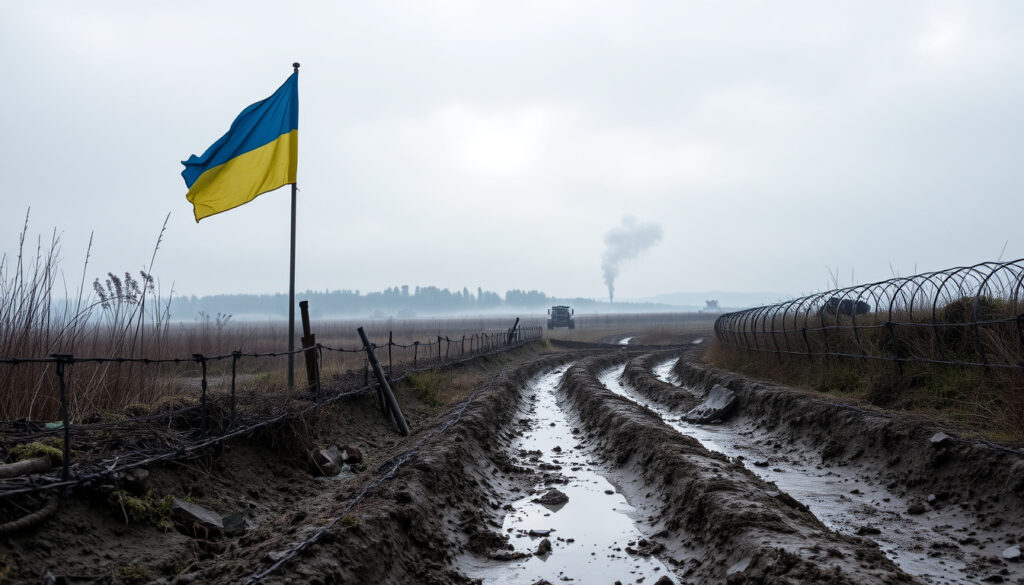
Ukraine Military News Today – Key Frontline Advances
Russian forces have made limited frontline advances in eastern Ukraine as of April 15, 2026, capturing Kalenyky in Donetsk and Sopych in Sumy, while Ukrainian forces reported recapturing 480 square kilometers across eastern and southeastern fronts since late January. The development comes amid escalating drone campaigns, with Ukrainian strikes reaching record depths inside Russia and Russian barrages killing dozens of civilians across multiple regions.
The Institute for the Study of War finalized frontline data on April 15, with interactive conflict maps showing current territorial control and attack directions. Ukrainian Army Chief Oleksandr Syrskyi reported significant gains in recent counteroffensive operations, though Russia launched more than 600 attacks in a four-day span as part of a major spring push for territorial advances and a “buffer zone.”
Drone warfare has intensified dramatically on both sides. Ukraine deployed swarm tactics with 250-300 drones in single nights, while Russia downed 389 Ukrainian drones overnight in late March—the largest interception since the invasion began. Civilian casualties remain substantial, with 49 deaths reported across 10 regions in a single wave of Russian strikes.
Latest Ukraine Military Developments Today
Key Insights From Recent Military Developments
- Drone warfare escalation: Ukrainian forces deployed swarm tactics with 250-300 drones in single nights during March 17-18, marking a significant tactical evolution
- Air defense degradation: Ukrainian strike packages between January 1 and March 18 degraded approximately half of Russia’s Pantsir air defense systems according to SBU intelligence
- Energy infrastructure impact: Russian oil exports have dropped 40% following sustained Ukrainian strikes on refineries, pipelines, and storage facilities
- Cross-border operations: Ukrainian drones struck a drilling rig in Crimea and a warship in Novorossiysk on April 6, demonstrating expanded naval targeting capabilities
- Civilian toll: Russian strikes killed 49 civilians across Chernihiv, Dnipropetrovsk, Donetsk, Kharkiv, Kherson, Kyiv, Mykolaiv, Odesa, Sumy, and Zaporizhia regions in one attack wave
- Counteroffensive momentum: Ukraine’s gains of 480 sq km in eastern and southeastern fronts since late January represent the most significant territorial recovery since earlier offensive operations
- Intelligence concerns: Evidence suggests Russian satellites surveyed Middle East sites before Iranian-linked strikes, indicating potential broader regional intelligence coordination
Snapshot of Key Military Facts
| Fact | Details | Source |
|---|---|---|
| Active Fronts | Donetsk, Sumy, Pokrovsk sector, Kursk region | ISW/ArcGIS StoryMaps |
| Russian Advances | Kalenyky (Donetsk), Sopych (Sumy border) | CFR Conflict Tracker |
| Ukrainian Gains | 480 sq km recaptured since late January; 12 settlements | Army Chief Syrskyi via CFR |
| Ukrainian Strikes on Russia | ~250 drones hit Moscow (March 14-16 record); 253 strikes in Russia week of March 14-20 | ACLED Monitor |
| Russian Drone Interceptions | 389 Ukrainian drones downed overnight March 25 (largest since invasion) | CFR Conflict Tracker |
| Civilian Deaths | 49 killed across 10 regions in single strike wave; 4 killed in Sloviansk | ACLED Monitor |
| Oil Export Reduction | Russia reduced exports 40% following Ukrainian strikes on infrastructure | CFR Conflict Tracker |
Key Russian Military Actions in Ukraine
Ground Offensive Operations
Russian forces have focused offensive operations along multiple axes in eastern Ukraine. The seizure of Kalenyky in Donetsk represents the most significant tactical gain after prolonged clashes aimed at advancing toward the Slovyansk-Kramatorsk urban center. Russian units also captured Sopych along the Sumy border region, expanding pressure across a wider front.
Around Pokrovsk, Russian forces have exploited perceived weaknesses in Ukrainian air defenses to intensify pressure in Donetsk. Army Chief Oleksandr Syrskyi confirmed that Russia launched more than 600 attacks over a four-day period in what he described as a major spring offensive designed to break defensive lines and establish territorial buffers.
Air and Missile Campaign
Russia’s strike campaign against Ukrainian infrastructure has grown in scale and frequency. A single massive assault involved more than 550 drones and missiles targeting civilian infrastructure including hospitals, residential buildings, and UNESCO World Heritage sites. The attacks killed dozens of civilians across multiple regions, with 4 fatalities and 16 injuries recorded in Sloviansk alone during one strike.
Recent strikes have also targeted critical infrastructure beyond immediate frontline areas. Attacks on the Dniester Hydropower station caused environmental damage extending into Moldova. Additional strikes disabled power, water, and heating systems serving Kyiv and surrounding areas, creating humanitarian challenges for civilian populations.
Border Incursions and Sabotage
Russian forces have employed tactics beyond conventional frontline engagements. Intelligence assessments indicate increased use of improvised explosive devices for sabotage operations behind Ukrainian lines. Glide bomb campaigns have intensified, allowing air-launched munitions to strike targets at extended ranges while minimizing aircraft exposure.
Sopych’s capture along the Sumy border demonstrates Russia’s continued interest in applying pressure across multiple frontiers rather than concentrating all offensive capability on single sectors.
Ukrainian Armed Forces Response and Advances
Counteroffensive Gains
Ukrainian forces have achieved measurable territorial gains in recent operations. Army Chief Oleksandr Syrskyi reported that Ukrainian troops recaptured 12 settlements and approximately 480 square kilometers across eastern and southeastern fronts since late January. Additional gains exceeding 400 square kilometers were reported in Dnipropetrovsk Oblast, indicating counteroffensive momentum beyond the primary operational areas.
These advances follow the initial Kursk offensive launched in August 2024, which captured approximately 1,250 square kilometers before stalling against an expanded Russian force presence of approximately 50,000 troops deployed to counter the incursion.
Drone Strike Capabilities
Ukraine has expanded drone deployment capabilities significantly, demonstrating swarm tactics with coordinated launches of 250-300 drones in single nights during operations in mid-March. The weekend of March 14-16 saw approximately 250 drones strike Moscow in what officials described as a record assault since 2022, temporarily shutting down airports serving the Russian capital.
Strike operations between January 1 and March 18 totaled more than 110 packages targeting facilities inside Russia. These included chemical factories, oil depots at Tikhoretsk, Labinsk, and Afipsky, port facilities, and military installations near Mariupol and Sevastopol.
Naval and Infrastructure Targeting
Ukrainian maritime capabilities have extended to strike naval vessels and offshore infrastructure. On April 6, Ukrainian drones successfully struck a drilling rig in Crimea and a warship in Novorossiysk port, demonstrating improved coastal and maritime targeting precision.
Ukrainian strike packages have degraded approximately half of Russia’s Pantsir air defense systems according to Ukrainian security service assessments, potentially creating vulnerabilities for subsequent operations.
Current Frontline Status and War Map
Interactive conflict maps updated to April 15, 2026 at 5:15 PM EST provide current frontline geometry based on Institute for the Study of War analysis. The maps show territorial control, attack directions, and recent engagement zones across eastern and southeastern Ukraine.
Multiple tracking resources maintain ongoing monitoring of developments. The DeepStateMap provides detailed territorial assessments updated regularly. CSIS maintains mapping resources tracking irregular warfare developments, while UKR Daily Update offers alternative tracking based on open-source intelligence.
Donetsk Operational Picture
The Donetsk front remains the most active sector of the conflict. Russian forces have advanced toward Kalenyky after months of fighting, positioning themselves for potential operations targeting the Slovyansk-Kramatorsk metropolitan area. Around Pokrovsk, Russian pressure continues as forces exploit perceived gaps in Ukrainian air defense coverage.
Both sides claim tactical gains near Sloviansk, with engagements continuing as Russian forces push toward key population centers while Ukrainian defenders hold established positions.
Northern Front Activity
The Sumy border region saw Russian forces capture Sopych, expanding the area of active ground operations into previously relatively quiet sectors. This development indicates Russian strategic interest in maintaining pressure across multiple fronts rather than concentrating all offensive capability in single operational areas.
Data reflects near real-time monitoring with potential lags in verification. Casualty figures and territorial assessments may change as additional reporting becomes available from independent sources.
Timeline of Recent Military Events
The following timeline summarizes key military events documented over the past several months based on conflict monitoring data.
- : Ukraine launches Kursk offensive, capturing approximately 1,250 square kilometers of Russian territory
- : Russia deploys approximately 50,000 troops to counter Kursk offensive; Ukrainian advance stalls
- : Ukraine begins counteroffensive operations in eastern and southeastern sectors
- : Ukrainian forces recapture 480 square kilometers and 12 settlements in eastern/southeastern fronts
- : Record drone assault on Moscow; approximately 250 drones strike the Russian capital
- : Ukraine deploys drone swarms of 250-300 aircraft in single nights
- : Russia intercepts 389 Ukrainian drones overnight, largest interception since invasion
- : Ukrainian drones strike Crimea offshore rig and Novorossiysk warship
- : ISW finalizes frontline data; Russian forces capture Kalenyky in Donetsk and Sopych in Sumy
Established Facts and Unverified Claims
| Claim | Verification Level | Source |
|---|---|---|
| Russian seizure of Kalenyky and Sopych | Verified — confirmed by multiple conflict monitoring sources | ACLED, CFR |
| Ukrainian recapture of 480 sq km since January | Verified — reported by Army Chief Syrskyi, corroborated by independent trackers | CFR Conflict Tracker |
| 49 civilian fatalities in single strike wave | Verified — documented across 10 regions with individual incident reports | ACLED Monitor |
| Pantsir defense degradation by ~50% | Partial — reported by Ukrainian security service; independent verification limited | SBU assessment per conflict tracking reports |
| Russia’s 40% oil export reduction | Partial — attributed to Ukrainian strikes; specific production data not independently confirmed | CFR Conflict Tracker |
| Russian satellite survey of Middle East sites | Unverified — reported through intelligence channels; specific details limited | Intelligence reporting per conflict monitor |
| Military casualty figures (both sides) | Unverified — no comprehensive official military casualty data in recent updates | No confirmed source reporting |
Strategic Context of Current Operations
The current operational picture reflects fundamental shifts in how both sides conduct offensive operations. Russia’s spring campaign emphasizes overwhelming firepower through concentrated attacks designed to identify and exploit defensive weak points rather than sustained territorial advance. The 600-plus attacks in four days described by Ukrainian military leadership illustrates the intensity Russian forces can generate when prioritizing localized breakthroughs.
Ukrainian strategy has evolved toward long-range precision strikes targeting Russian energy infrastructure and air defense systems. The 40% reduction in Russian oil exports demonstrates the cumulative impact sustained infrastructure attacks can achieve, potentially affecting military logistics and economic capacity to sustain prolonged operations.
Drone warfare has emerged as the defining tactical characteristic of current operations. Ukraine’s investment in swarm capabilities and deep strike capacity has created new operational challenges for Russian air defenses, while Russia’s ability to intercept large numbers of incoming drones demonstrates both the scale of Ukrainian operations and the resources Russia dedicates to homeland air defense. For broader context on related U.S. policy developments affecting international responses, see this analysis of Trump Administration Canada Trade.
Sources and Official Statements
“Russia launched over 600 attacks in four days to break our defensive lines in a major spring push for land and a buffer zone.”
— Army Chief Oleksandr Syrskyi, Ukrainian Armed Forces
“Our strike packages have degraded approximately half of Russia’s Pantsir air defense systems, creating opportunities for subsequent operations.”
— Ukrainian Security Service assessment reported through official channels
Primary monitoring sources include the Armed Conflict Location & Event Data Project (ACLED) and the Council on Foreign Relations Conflict Tracker. Frontline geometry data derives from Institute for the Study of War analysis available through ArcGIS StoryMaps.
Summary
Russian forces have made incremental territorial advances in Donetsk and Sumy as of April 15, 2026, seizing Kalenyky and Sopych while Ukrainian forces simultaneously reported recapturing 480 square kilometers across eastern and southeastern fronts. The operational picture reflects escalating drone warfare, with Ukraine deploying swarm tactics reaching deep into Russian territory while Russia intercepts record numbers of incoming aircraft. Civilian casualties from Russian strikes remain substantial, though Ukrainian counteroffensive operations continue generating territorial gains.
Frequently Asked Questions
What territory has Ukraine recaptured as of April 2026?
Ukraine has recaptured approximately 480 square kilometers across eastern and southeastern fronts since late January, including 12 settlements, plus over 400 square kilometers in Dnipropetrovsk Oblast.
How many Russian attacks have occurred in recent days?
Russia launched over 600 attacks in a four-day period during its major spring offensive push toward Ukrainian defensive positions.
What is the current status of drone warfare between Ukraine and Russia?
Ukraine has deployed drone swarms of 250-300 aircraft in single nights, striking Moscow in record numbers, while Russia downed 389 Ukrainian drones overnight in late March—the largest interception since the invasion began.
How many civilians have been killed in recent Russian strikes?
Russian strikes killed 49 civilians across 10 regions in a single attack wave, including 4 fatalities and 16 injuries in Sloviansk, with additional casualties in Chernihiv, Dnipropetrovsk, Kharkiv, and other regions.
What infrastructure has Ukrainian drone strikes targeted?
Ukrainian drones have targeted oil depots at Tikhoretsk, Labinsk, and Afipsky, chemical factories, ports, military bases near Mariupol and Sevastopol, a Crimea offshore drilling rig, and a warship in Novorossiysk.
Where can I find current war maps showing frontline positions?
Interactive maps updated to April 15, 2026 showing current frontline geometry are available through the Institute for the Study of War analysis on ArcGIS StoryMaps, DeepStateMap, and CSIS mapping resources.
What impact have Ukrainian strikes had on Russian energy exports?
Russian oil exports have decreased by approximately 40% following sustained Ukrainian strikes on refineries, pipelines, and storage infrastructure.
What happened during the Ukrainian Kursk offensive?
The Ukrainian Kursk offensive launched in August 2024 captured approximately 1,250 square kilometers of Russian territory before stalling against approximately 50,000 Russian troops deployed to counter the incursion.
More related posts
 How Old is the Earth? 4.54 Billion Years Explained
 Henry Cavill Movies and TV Shows – Full Filmography Guide
 Us Open Golf 2025 – Oakmont Dates, Schedule, Field
 JoJo Siwa Net Worth 2025: $20M After $4.1M Sale
 Homes for Sale Saskatoon: 600+ MLS Listings & Prices
 How to Make Viral Dubai Chocolate at Home: Easy Recipe
 Musée des Beaux-Arts: Exhibitions, Hours & City Guides
 Quebec Minimum Wage 2026: $16.60/hr Increase May 1