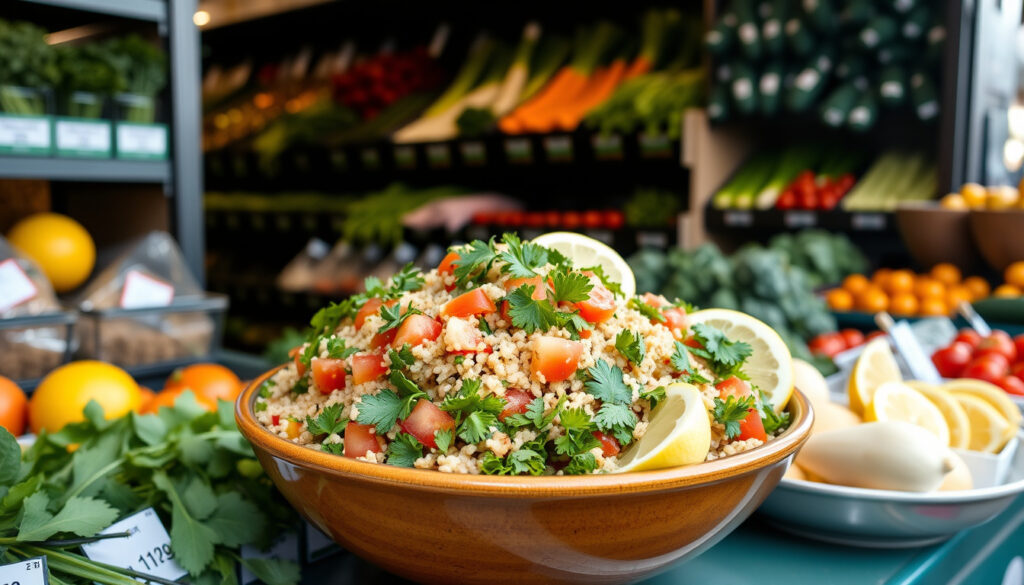
Tabbouleh Salad Near Me: Stores, Health & Availability
If you’ve ever wandered the prepared foods aisle hoping to find something fresher than coleslaw, you know the hunt for tabbouleh near you can be surprisingly frustrating. That bright, lemony parsley salad most of us have tasted at Lebanese restaurants rarely shows up in mainstream supermarkets — at least not under that name. The good news: at least one major retailer stocks a version year-round, and a few specialty shops in Dublin can likely make one up fresh.
Main Ingredient: Parsley · Origin: Levantine · Calories per Serving: ~150 · Key Nutrients: Vitamin C, Fiber · Store Availability: Aldi, SuperValu, Dunnes
Quick snapshot
- Parsley dominates traditional recipes — a full 6 cups of finely chopped leaves in authentic preparations (Hadia’s Lebanese Cuisine YouTube)
- Aldi stocks Park Street Deli Taboule Salad in its refrigerated aisle as a regular buy (Aldi Reviewer)
- Irish supermarkets (Aldi, Dunnes, SuperValu) carry prepared salads in chilled sections (Magic Mum)
- Whether Aldi stocks the same product in Irish stores — pricing noted in US dollars ($2.99)
- Whether Dunnes Stores or SuperValu carry a specific tabbouleh product or only customizable salad counters
- No recent documentation of product introductions or regional rollout dates
- Aldi Taboule Salad listed as ongoing regular buy with two-week sell-by window (Aldi Reviewer)
- Authentic recipes and Dublin food guides remain publicly available with no stated discontinuation warnings ((Aldi Reviewer))
- Specialty Middle Eastern grocers and restaurant suppliers likely remain the most reliable source for authentic versions
- If Dunnes Food Halls expand their salad counter selections, tabbouleh could become a more accessible option in Dublin
The table below summarizes key specifications for both store-bought and traditional tabbouleh to help you compare at a glance.
| Label | Value |
|---|---|
| Primary Ingredient | Parsley |
| Base Grain | Bulgur wheat |
| Typical Serving Size | 210-220g |
| Vegetarian | Yes |
| Key Stores | Aldi, SuperValu, Dunnes |
Does Aldi sell tabouli salad?
Yes — Aldi carries the Park Street Deli Taboule Salad as a standing product in its refrigerated prepared foods section. According to Aldi Reviewer, the product sits alongside chickpea salad and black bean salad in the mixed case. A 7-ounce container costs $2.99 in the United States, which works out to roughly 43 cents per ounce.
One half-cup serving delivers 170 calories, 13g total fat, 1.5g saturated fat, 450mg sodium, 13g carbohydrates, 3g fiber, 2g sugars, and 2g protein (Aldi Reviewer). The container holds two half-cup servings, giving you about 340 calories per package if you eat it all in one go. The sell-by date runs approximately two weeks from purchase, which means it has a decent window compared to some fresh-cut salads.
The ingredient list includes parsley, fresh tomatoes, onions, lemon juice, bulgur (cracked wheat), sunflower oil, olive oil, sea salt, citric acid, black pepper, allspice, sodium benzoate, and potassium sorbate (Aldi Reviewer). Two things stand out immediately: sunflower oil appears alongside olive oil, and two preservatives are added. Neither shows up in traditional Lebanese recipes.
Aldi offers the most accessible pre-packaged option, but the preservatives and mixed-oil formula mark it as a convenience product rather than an authentic rendition. Call it a decent weeknight shortcut, not a replacement for the real thing.
Park Street Deli Taboule Salad Availability
The Park Street Deli brand is Aldi’s in-house prepared foods label, and the taboule salad shows up year-round rather than seasonally. This makes it one of the few reliable mainstream sources for anyone searching “tabbouleh salad near me” without access to specialty grocers.
One important caveat: the pricing and packaging details come from US Aldi stores. Irish Aldi locations may carry a similar product, but pricing would likely be listed in euros and availability cannot be confirmed from current sources.
Same-Day Delivery or Pickup Options
US Aldi customers can order through Instacart in participating markets, but Irish customers relying on Aldi for tabbouleh should check directly with their local store about same-day pickup or delivery through services like Buymie, which partners with several Dublin supermarkets.
Is tabbouleh healthy to eat?
Tabbouleh earns its reputation as a genuinely healthy option, particularly when compared to cream-based salads or heavily processed sides. The core ingredient is parsley — a leafy herb loaded with vitamin C, vitamin K, and antioxidants. A traditional serving is light on the grains and heavy on the herbs, which keeps carbohydrates lower than most grain salads.
Bulgur, the cracked wheat base, adds soluble fiber that supports digestion and helps regulate blood sugar (Authentic Lebanese Tabbouleh YouTube). Store-bought versions like Aldi’s retain the fiber benefit but may add sodium through preservatives. The 450mg sodium count per serving is worth noting if you’re watching your salt intake — that’s roughly 20% of the recommended daily limit.
The olive oil base in traditional recipes contributes heart-healthy monounsaturated fats. Aldi’s version uses a sunflower oil blend, which shifts the fatty acid profile toward more polyunsaturated fats. Not a dealbreaker, but a difference worth knowing.
If you’re tracking sodium or prefer traditional fats, homemade or specialty-made tabbouleh gives you more control. Store-bought is convenient but brings additives that traditional recipes avoid entirely.
Heart-Healthy Benefits
The combination of parsley’s antioxidants, bulgur’s fiber, and olive oil’s monounsaturated fats makes tabbouleh genuinely cardio-friendly. The fiber helps bind cholesterol in the digestive tract, while the herbs add micronutrients that support overall nutrient density.
Digestion and Superfood Status
Bulgur ranks among the oldest processed whole grains in the Middle East, and its fiber content is well-documented for digestive health. Some culinary sources describe tabbouleh as a “superfood” dish precisely because it concentrates so many nutrients into a low-calorie format. The refreshing quality that makes it a summer staple in Lebanon also means it encourages hydration through its high water content.
What is the main ingredient in tabbouleh salad?
Parsley is the star — not bulgur, despite what many people assume. Authentic Lebanese tabbouleh uses roughly 6 cups of finely chopped flat-leaf parsley leaves to 2 tablespoons of fine bulgur, a ratio that places the herb firmly at center stage (Hadia’s Lebanese Cuisine YouTube). The bulgur provides structure and a subtle nutty flavor, but it plays a supporting role.
Traditional recipes call for: 6 cups finely chopped parsley leaves, 5 diced tomatoes, 7 mint leaves, 1 onion, half a cup of olive oil, quarter cup of lemon juice, salt, and 2 tablespoons of fine bulgur (Hadia’s Lebanese Cuisine YouTube). Some versions add allspice or green onions, but parsley dominates in every authentic preparation.
Most store-bought versions invert this ratio. Aldi’s ingredient list leads with parsley, but bulgur and tomato likely appear in larger proportions than traditional recipes dictate — convenience foods tend to favor shelf stability over authenticity.
Traditional Recipe Breakdown
Authentic preparation demands fine chopping — no food processors, mostly knife work. The parsley stems get removed entirely, leaving only leaves. Mint is added in small quantities for aroma rather than volume. The bulgur gets soaked for 30 minutes in lemon juice, olive oil, salt, and pepper before being folded in (Authentic Lebanese Tabbouleh YouTube). This soaking step gives authentic tabbouleh its distinctive texture: tender grains instead of hard bits.
Bulgur Wheat Role
Bulgur is precooked cracked wheat, which means it rehydrates quickly and is ready to eat without cooking. Fine grade #1 bulgur, commonly called “bulgur fine,” absorbs liquid faster and creates that soft, almost pasta-like texture in tabbouleh. Medium or coarse bulgur would create a chewier result that doesn’t match the traditional profile.
Is tabbouleh Lebanese or Palestinian?
Tabbouleh is a Levantine dish — it belongs to the broader Eastern Mediterranean region that includes both Lebanon and Palestine, along with Syria and Jordan. The debate over primacy is genuine in food culture, with both countries claiming it as their national salad. What historians and food scholars generally agree on is that the dish as we know it today crystallized in the Lebanon/Palestine area during the Ottoman period, with Lebanese and Palestinian versions sharing nearly identical ingredient lists.
Chef Hadia, whose Lebanese Cuisine channel has published multiple tabbouleh recipes, describes it as “the mother of all Lebanese salads” — a phrase that reflects how deeply the dish sits in Lebanese food identity (Hadia’s Lebanese Cuisine YouTube). Wikipedia’s overview presents similar context, noting the dish’s deep roots in Levantine cuisine across multiple communities.
For someone searching for “authentic” tabbouleh, the honest answer is that both Lebanese and Palestinian versions are authentic. What matters more is whether the parsley ratio is high, the bulgur fine and soaked properly, and the olive oil dominant — regardless of which flag is on the label.
Levantine Origins
The word “tabbouleh” derives from the Arabic “tabl” meaning small ball or small fragment, likely referring to the bulgur particles. The dish evolved as a herb-focused salad in rural communities where parsley and mint grew abundantly. Its current form — heavy on parsley, light on grains — represents a refinement from older versions that used more bulgur.
Wikipedia Overview
The Wikipedia entry on tabbouleh documents its status as a Levantine salad with roots across multiple countries, noting that Lebanese and Palestinian versions are nearly identical. The entry also references international adaptations, including quinoa-based versions that swap grains entirely for dietary preferences (Meemaw Eats).
Where to find tabbouleh salad near me?
Your options in Ireland break down into three tiers: mainstream supermarkets with prepared salad sections, specialty food shops with Middle Eastern offerings, and restaurant-quality prepared food suppliers.
Aldi appears to be the only major chain confirmed to stock a specific tabbouleh product — the Park Street Deli version — though documentation centers on US stores (Aldi Reviewer). Dunnes Food Halls in Dublin have salad counters where staff assemble boxes starting at €3 (Amazing Food and Drink), and while no source confirms a specific tabbouleh selection, the customizable format means you could potentially request one.
SuperValu carries prepared salads under its Signature Tastes range, but current research turned up no specific tabbouleh listings. The gap likely reflects seasonal and regional variation rather than a policy decision.
Donnybrook in Dublin stocks Lebanese tabbouleh through its specialty prepared foods section, and several restaurants in the Dublin area offer it on menus or for takeout. Uber Eats and Deliveroo listings in the Dublin area may surface local restaurants that prepare it fresh.
Top Stores like SuperValu and Dunnes
Dunnes Food Hall on Dublin’s northside runs a salad counter where customers choose from available options. At €3 and up for a starting box, it competes well on price (Amazing Food and Drink). SuperValu’s Signature Tastes prepared salads include grain-based options, though tabbouleh specifically remains unconfirmed in published sources.
Donnybrook Fair and Uber Eats Options
Donnybrook Fair — a higher-end food market in Dublin 4 — stocks prepared salads including Lebanese offerings. For home delivery, Uber Eats shows multiple Middle Eastern and Lebanese restaurants in Dublin that list tabbouleh as a menu item, often prepared to order rather than pre-made. This freshness comes with a price premium but typically guarantees better quality than supermarket versions.
Is store-bought tabbouleh healthy?
Store-bought tabbouleh retains most of the health benefits of homemade — you’re still getting parsley, bulgur, lemon, and olive oil in most versions. The trade-offs come from processing choices: preservatives for shelf life, sodium levels for flavor retention, and oil blends that may not match traditional recipes.
Aldi’s version is preservative-heavy by design — sodium benzoate and potassium sorbate extend the two-week shelf life significantly compared to a homemade batch that lasts 4-5 days in the fridge (Aldi Reviewer). Whether those extra days are worth the additives is a personal judgment call.
The sodium content of 450mg per half-cup serving adds up quickly if you’re eating multiple servings. If you’re watching salt intake, a single serving takes up roughly one-fifth of your daily limit — moderate accordingly.
Pros and Cons of Bulgur
Bulgur brings fiber, protein, and a low glycemic index that makes it friendlier for blood sugar control than many grains. It’s also one of the fastest-cooking whole grains because it’s precooked. The downside in store-bought versions is that bulgur quality and freshness vary — older stock may taste slightly stale compared to homemade.
Comparison to Homemade
Homemade tabbouleh lets you control every variable: fresh herbs chopped minutes before serving, lemon juice squeezed from fresh fruit, olive oil that’s high quality and abundant. Store-bought versions sacrifice some of that freshness for convenience, but they eliminate the 15-20 minutes of active prep time that authentic tabbouleh requires.
Upsides
- Parsley superfood benefits preserved in store-bought versions
- Aldi offers consistent, year-round availability
- Ready to eat — no chopping or soaking required
- Dunnes Food Hall offers customizable salad options
Downsides
- Preservatives (sodium benzoate, potassium sorbate) not present in traditional recipes
- Sunflower oil blend differs from all-olive-oil traditional preparations
- 450mg sodium per serving requires monitoring
- Irish store availability not fully confirmed — US pricing may not apply
“Most probably you have had tabbouleh at a Lebanese or Middle Eastern restaurant. It is the mother of all Lebanese salads.”
— Hadia, chef and content creator (Hadia’s Lebanese Cuisine YouTube)
“It’s well seasoned and makes for a good side dish to a meal. We like this and will be adding it to our shopping list again.”
— Aldi Reviewer, product reviewer (Aldi Reviewer)
Related reading: Halal Food Near Me
Frequently asked questions
Does Aldi sell tabouli salad?
Yes. Aldi stocks Park Street Deli Taboule Salad as a year-round product in its refrigerated prepared foods section. The 7-ounce container sells for $2.99 in the United States; Irish pricing and availability should be confirmed directly with your local store.
What is the main ingredient in tabbouleh salad?
Parsley — not bulgur. Authentic recipes use approximately 6 cups of finely chopped flat-leaf parsley to just 2 tablespoons of bulgur. The grain provides structure but the herb dominates the dish by volume and nutritional contribution.
Is store-bought tabbouleh healthy?
It retains most health benefits: fiber from bulgur, antioxidants from parsley, and healthy fats. However, watch for sodium — Aldi’s version has 450mg per serving — and preservatives that traditional recipes avoid. Homemade or specialty-made versions offer better control over ingredients.
What is the disadvantage of eating bulgur?
Bulgur contains gluten, which makes it unsuitable for anyone with celiac disease or gluten sensitivity. Beyond that, bulgur is generally a nutritious grain. The real “disadvantage” in store-bought tabbouleh is that the bulgur quality may be lower than what you’d use at home, and some versions use more bulgur than traditional recipes call for, pushing the carb content higher.
Why is Aldi called the Aisle of Shame?
The “Aisle of Shame” nickname refers to Aldi’s signature wide center aisle, where limited-time specialty items (ALDI Finds) are displayed prominently. Unlike typical grocery store layouts, this aisle showcases non-food goods, seasonal products, and rotating specials — and shoppers often find themselves wandering through it repeatedly, drawn by unexpected deals. The tabbouleh, by contrast, sits in the refrigerated prepared foods section, not this famous aisle.
What is the healthiest salad to eat in the world?
No single salad claims a universal “healthiest” title — the answer depends on your nutritional priorities. Tabbouleh scores high in fiber, micronutrients, and low-calorie density, making it an excellent choice for those prioritizing heart health and digestion. Mediterranean-style salads with leafy greens, olive oil, and vegetables consistently rank among the most nutrient-dense options globally.
Where can I find traditional tabbouleh salad near me?
In Dublin, Donnybrook Fair stocks Lebanese tabbouleh through its specialty prepared foods section, and several Middle Eastern restaurants list it on menus or for takeout via Uber Eats or Deliveroo. Dunnes Food Hall’s customizable salad counter may also yield a version if you ask at the counter — the format allows for custom requests.
More related posts
 Prime Minister Mark Carney: Canada’s 24th Leader Profile
 Toyo Open Country AT3 Tire Review: Is It a Good All-Terrain?
 Jon Jones: Retirement, Allegations, Record, $30M Offer
 Black Bolt Card List – Stats Decks Synergies Meta Guide
 Red Light Face Masks: Do They Work? Benefits & Risks
 Symptoms of Sinus Infection – Key Signs vs Colds
 Convert cm to Feet: The Easy Height Conversion Guide
 How to Fix DNS_PROBE_FINISHED_NXDOMAIN Error on Chrome