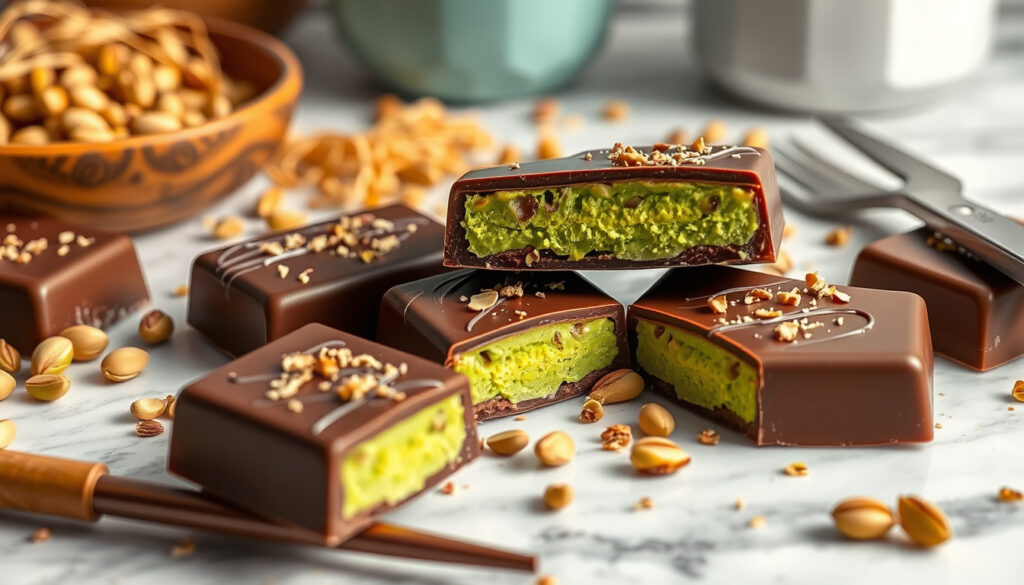
How to Make Viral Dubai Chocolate at Home: Easy Recipe
If you’ve ever fallen down a TikTok rabbit hole at midnight, you already know the Dubai chocolate bar. That viral green-and-gold rectangle, glossy chocolate shell over a filling that crunches and melts in the same bite—it got people in 2024 doing something rare: putting down the phone and actually heading to the kitchen. Here’s how to make it at home with five ingredients and a little patience.
Core Filling: Pistachio paste and tahini · Crispy Texture: Toasted kataifi pastry · Chocolate Base: Milk or dark chocolate · Key Addition: Butter for crispiness · Viral Origin: TikTok sensation from Dubai
Quick snapshot
- Milk or semi-sweet chocolate (16 oz) (Gimme Delicious)
- Kataifi pastry (shredded phyllo) (Hummingbird High)
- Pistachio cream or butter (Drizzle and Dip)
- Tahini (optional, adds richness) (It Doesn’t Taste Like Chicken)
- Butter or coconut oil for toasting kataifi (Healthy Fitness Meals)
- 20 minutes active prep (Healthy Fitness Meals)
- 3+ hours refrigeration for setting (It Doesn’t Taste Like Chicken)
- Toasting kataifi: 20 min in oven at 350F (Love and Other Spices)
- 1 large bar (standard silicone mold)
- Serves 8-10 when sliced
- Customizable to cup or cookie formats
- Home version: under $10 per bar
- Store-bought bars: $20+ each
- Most savings come from skipping specialty retail markups
The table below summarizes the defining characteristics of the Dubai chocolate bar across origin, texture, flavor profile, and chocolate selection.
| Label | Value |
|---|---|
| Origin | Viral Dubai chocolate bar |
| Signature Texture | Crunchy kataifi filling |
| Main Flavor | Pistachio cream |
| Chocolate Type | Milk or 70% dark |
What are the ingredients for Dubai chocolate?
The Dubai chocolate bar runs on five main ingredients: chocolate, kataifi, coconut oil or butter, pistachio butter, and tahini (Healthy Fitness Meals). Each one earns its place.
The chocolate is almost always milk or semi-sweet—some recipes specify up to 16 oz per batch depending on mold size (Gimme Delicious). The kataifi is the wildcard that makes this bar recognizable: it’s shredded phyllo dough, and toasting it in butter is what gives the filling its signature crunch (It Doesn’t Taste Like Chicken). Pistachio cream—either store-bought or homemade—holds everything together with its nutty green richness. Tahini is optional, but it smooths the paste and adds a subtle sesame undertone (Drizzle and Dip). Butter (or coconut oil) gets toasted into the kataifi for flavor and crispiness.
Core chocolate and filling components
At minimum, you need chocolate for the shell, kataifi for crunch, and a pistachio product for the filling. The tahini and extra butter are nice-to-haves that professional recipe developers keep reaching for.
Kataifi pastry role
Kataifi is shredded phyllo dough. The strand-like texture toasts into something between shredded wheat and fragile glass when fried in butter until golden (Hummingbird High). Recipes call for cutting kataifi to roughly 1 cm lengths before toasting for easier eating and better texture distribution (Drizzle and Dip). It must be thawed if frozen before use—frozen kataifi won’t crisp properly and will throw off the whole recipe (It Doesn’t Taste Like Chicken).
Pistachio paste details
The filling green comes from pistachio cream or paste. Some home cooks make it from scratch: blend 500 g raw pistachios with 2 tablespoons tahini and 80-100 g melted white chocolate for creaminess (Drizzle and Dip). One confirmed ratio from an Australian pastry brand uses 230 g pistachio paste with 100 g kataifi for the filling layer (Antoniou Fillo Pastry). Store-bought works fine if quality is decent—the key is getting that vivid green and nutty flavor right.
The filling ratio of equal parts pistachio cream to kataifi (about ⅔ cup each) shows up across multiple independent recipes—taste it and adjust. More pistachio cream makes a gooier bar; more kataifi cranks up the crunch.
How is the Dubai chocolate made?
Dubai chocolate bars went viral in 2024 when Fix Dessert Chocolatier in Dubai posted the bar that inspired home cooks worldwide to reverse-engineer the recipe (Drizzle and Dip). The process has three main stages: toast the kataifi, mix the filling, assemble the bar.
Preparing the kataifi
Kataifi needs toasting to develop crunch. Two methods work: oven and pan-fry. Oven toasting at 350°F for 20 minutes gives more even results—stir halfway through for even browning (Love and Other Spices). Pan-frying in butter is faster but demands constant stirring. Either way, the goal is golden-brown, fragrant strands. Chopping kataifi over a cutting board before toasting makes the pieces easier to manage and eat (Healthy Fitness Meals). Let it cool before mixing.
Mixing the filling
Combine toasted kataifi with pistachio cream. Tahini is optional—some recipes skip it for a purer pistachio flavor, others add 2 tablespoons for richness. Stir well until every strand is coated. For cookie-style fillings, use equal parts in ⅔ cup measures and freeze the dollops before using—chilled filling handles more predictably (Sugar Spun Run). For bars, mixing at room temperature works fine; the filling firms up once cold but stays workable for assembly.
Assembling and setting
Melt 16 oz chocolate and pour into silicone molds, twisting to coat the sides. Chill 10-15 minutes until the shell sets (Love and Other Spices). Fill with the kataifi-pistachio mixture, pressing into corners for even distribution. Top with remaining chocolate and smooth with an offset spatula. Refrigerate 30-40 minutes until firm (It Doesn’t Taste Like Chicken). Unmold, let rest at room temperature for a few minutes, and slice.
The pistachio filling hardens if refrigerated too long—Love and Other Spices specifically warns against over-chilling. Set at room temperature once out of the fridge for the best texture.
What is the green stuff in the Dubai chocolate?
The iconic green layer is pistachio cream or paste—the ingredient that makes Dubai chocolate immediately recognizable on any feed. It’s not food coloring; it’s the natural color of ground pistachios blended into a smooth, spreadable consistency.
Pistachio paste composition
High-quality pistachio cream is essentially ground pistachios with enough fat to blend into a paste. Some recipes start from scratch using 500 grams raw pistachios, 2 tablespoons tahini, and 80-100 grams melted white chocolate for smoothness and added sweetness (Drizzle and Dip). Tahini helps the blending process and adds a slight sesame note; melted white chocolate (or white chocolate chips) acts as a binder and softens the intensity of pure pistachio. The result is richer and more customizable than most store-bought versions.
Role in texture and flavor
Pistachio cream does more than color. It binds the filling, providing a smooth counterpoint to the crunchy kataifi strands. The tahini cuts through some of the nuttiness, and the white chocolate balances sweetness. Without it, you’d have loose toasted phyllo with chocolate—not a bar, just a mess. With it, the filling holds together well enough to slice cleanly while delivering that distinctive pistachio flavor in every bite.
Homemade pistachio cream spoils faster than commercial versions with added preservatives. Refrigerate any leftovers and use within two weeks.
What to use for Dubai chocolate instead of kataifi?
Kataifi can be hard to find outside specialty grocery stores or online retailers. Several substitutions work, though each changes the bar’s character slightly.
Crisp alternatives
Shredded phyllo dough (the same product, sometimes called kataifi) produces the most authentic results. If that’s unavailable, crushed digestive biscuits or shortbread give a buttery crunch similar in spirit. Rice crispy cereal or lightly crushed cornflakes offer a different kind of crunch—lighter and snappier than kataifi’s flaky bite. The trade-off is flavor: kataifi toasts in butter to develop a slightly caramelized, nutty quality that plain cereals can’t replicate.
No-kataifi recipes
Some home cooks skip the kataifi entirely and use extra pistachio cream for a denser, fudge-like bar. Others substitute with crushed amaretto cookies or almond biscotti for a complementary nuttiness. Gimme Delicious catalogs variations including peanut butter pretzel, Biscoff, and Nutella fillings as alternatives to the pistachio-kataifi standard (Gimme Delicious). None of these match the original bar’s texture, but they’re genuinely good in their own right.
Is it cheaper to make your own Dubai chocolate?
Home versions consistently come in under $10 per bar versus $20 or more for store-bought. For most home cooks, the math favors making it yourself—especially if you value the ability to tweak flavors and control ingredient quality.
Ingredient costs
The priciest component is usually pistachio cream or paste, especially if buying imported Middle Eastern brands. Raw pistachios for homemade cream run cheaper in bulk but require a food processor and extra effort. Kataifi costs very little per bar—it’s essentially flour and fat. Chocolate, butter, and tahini round out a modest grocery bill. Specialty silicone molds are a one-time purchase.
Versus store-bought pricing
Commercial Dubai chocolate bars from brands like Fix Dessert Chocolatier retail for $20-$30 per bar in many markets. Some specialty food retailers have marked them up further. The homemade version costs mostly pantry staples and one specialty ingredient. The trade-off is time: a store-bought bar is grab-and-go, while DIY requires 20 minutes of active work plus at least 3 hours of chilling (It Doesn’t Taste Like Chicken). If that time investment sounds reasonable for a weekend project, the homemade version wins on value.
Step-by-Step Dubai Chocolate Recipe
This is the bar format that sparked the trend. Everything else—cups, cookies, tarts—stems from these same principles.
Step 1: Toast the kataifi
Chop kataifi into roughly 1 cm lengths over a cutting board. Melt 2-4 tablespoons butter in a pan over medium heat, add kataifi, and fry, stirring constantly, until golden and crispy (Drizzle and Dip). Alternatively, spread on a baking sheet and toast at 350°F for 20 minutes, stirring halfway through (Love and Other Spices). Let cool completely.
Step 2: Make the filling
Combine toasted kataifi with pistachio cream and 2 tablespoons tahini if using. Stir until well incorporated and every strand is coated. Set aside.
Step 3: Melt the chocolate
Using a double boiler or microwave in 30-second bursts, melt 16 oz milk or semi-sweet chocolate, stirring until smooth (Gimme Delicious). For a professional finish, Drizzle and Dip recommends tempering: pour into mold, twist to coat the sides evenly, then chill just until set.
Step 4: Line the molds
Pour melted chocolate into silicone bar molds, twisting and tilting to coat the sides. Refrigerate for 10-15 minutes until the chocolate shell is firm but not brittle.
Step 5: Fill and seal
Spoon the kataifi-pistachio filling into each mold, pressing into corners for even distribution. Pour remaining melted chocolate over the top. Use an offset spatula to smooth and seal the edges completely.
Step 6: Set and unmold
Refrigerate for 30-40 minutes until fully set (It Doesn’t Taste Like Chicken). Remove from molds and let rest at room temperature for a few minutes before slicing and serving.
For gooier bars, stir in extra pistachio cream—one or two extra spoonfuls makes a noticeably runnier filling that some testers prefer (It Doesn’t Taste Like Chicken). The tradeoff is structural: a gooier filling is harder to slice cleanly.
Confirmed facts
- Kataifi toasted in butter creates the signature crunch
- Pistachio paste or cream is the green filling component
- Tahini smooths and enriches the pistachio paste
- Chill time for bars: 30-40 minutes
- 16 oz chocolate per batch is a standard amount
- Oven toast temperature: 350°F for kataifi
What’s unclear
- Exact commercial recipe ratios from the Dubai brand
- Professional tempering temperatures
- Precise viral start date with social media metrics
- Official nutritional data per serving
- Shelf life and storage best practices for homemade bars
Expert Perspectives
“Crispy kataifi creates the signature crunch. Frying the pastry in butter until golden is crucial.”
— Drizzle and Dip (Recipe Developer)
“Homemade pistachio cream is richer than store-bought. Making your own gives you control over sweetness and texture.”
— Drizzle and Dip (Recipe Developer)
“This pistachio filling will harden if it’s refrigerated for too long. Set at room temperature preferred.”
— Love and Other Spices (Recipe Developer)
“Tip: If you prefer your bars a little gooier, just stir in an extra spoonful or two of pistachio cream.”
— It Doesn’t Taste Like Chicken (Recipe Developer)
The pattern is clear across dozens of independent recipes: the bar is forgiving. Measurements vary, ratios flex, and the filling accommodates personal preference. What remains consistent is the three-part structure—crunchy base, pistachio middle, chocolate shell—and the technique that ties it all together: toasting the kataifi until it actually crisps. Most failed attempts trace back to skipping or shortchanging that step.
Related reading: Dubai Chocolate Bar (Vegan Recipe) · Viral Dubai Chocolate Bar with Knafeh Pistachio Cream
Recreating the viral TikTok sensation starts with grasping its signature pistachio cream and kataifi core, as in this detailed Dubai chocolate breakdown.
Frequently asked questions
What makes Dubai chocolate special?
The combination of textures is what sets it apart. That contrast between silky pistachio cream and shatteringly crisp kataifi inside a thin chocolate shell doesn’t show up in other confections. It looks striking, tastes distinctive, and the crunch factor gives it a mouthfeel that keeps people reaching for another piece.
Why is Dubai chocolate expensive?
Specialty ingredients (quality pistachio paste, kataifi), import markups in many markets, and novelty pricing during peak viral demand drove retail prices to $20-30 per bar. Making it at home sidesteps most of those costs.
How to make Dubai chocolate kataifi?
Kataifi is shredded phyllo dough. To toast it: chop into 1 cm pieces, fry in butter over medium heat until golden and fragrant, stirring constantly, about 5-8 minutes. Alternatively, spread on a baking sheet and bake at 350°F for 20 minutes, stirring halfway through. Cool before mixing into the filling.
Where to source Dubai chocolate ingredients online?
Pistachio cream or paste is available at Middle Eastern grocery stores, specialty food shops, and online retailers. Kataifi is sold at Greek or Middle Eastern markets, some large grocery chains with international sections, and online. Raw pistachios for homemade cream are easier to source in bulk online or at natural food stores.
How to make Dubai chocolate at home easy?
Keep it simple: melt good chocolate, toast kataifi in butter, mix with quality pistachio cream, layer in a mold, chill, and slice. The silicone mold approach handles unmolding without frustration. Don’t overthink the ratios—equal parts pistachio cream and kataifi works as a starting point.
3 ingredient Dubai chocolate?
Technically, you can make a simplified version with just chocolate, pistachio cream, and kataifi. That’s three ingredients minimum. The tahini, extra butter, and other additions are refinements, not essentials. Quality suffers a bit without them, but the bar still holds together and tastes recognizable.
More related posts
 Tomb of the Mask: Play Online, PC & Platforms
 Hard Rock Punta Cana: Is It Good? All-Inclusive Review
 Normal Temperature for Adult: Ranges, Fever Thresholds & Concerns
 Hockey Hall of Fame Tickets – Prices, Deals and Buying Guide
 Immigration Canada Phone Number – Official IRCC Contact Guide
 Did Ed Gein Kill His Brother? Henry Gein’s Mysterious Death
 AL East Standings 2025 – Blue Jays Win Division Title
 Codes for Basketball Zero – Latest Active Promo Codes