Boy in the Striped Pajamas – Summary, Ending and True Story
John Boyne’s 2006 novel The Boy in the Striped Pajamas presents the Holocaust through the eyes of a nine-year-old German child, creating a narrative that has sparked international discussion about historical representation and innocence amid atrocity.
The story follows Bruno, the son of a Nazi commandant, whose family moves from Berlin to a location he misunderstands as “Out-With” during the height of World War II. Isolated and confused by his new environment, Bruno forms a secret friendship with a boy named Shmuel, who lives on the other side of a fence wearing what Bruno believes are striped pajamas.
Since its publication, the book has sold millions of copies and received both literary recognition and significant criticism regarding its approach to depicting concentration camp life. The 2008 film adaptation further cemented its place in popular culture, while educators continue to debate its appropriate use in Holocaust education.
What Is The Boy in the Striped Pajamas About?
Book
2006 novel by John Boyne, WWII fiction
Film
2008 adaptation directed by Mark Herman, PG-13
Genre
Historical fiction, Holocaust drama
Key Theme
Innocence versus horror
Bruno’s family relocates from Berlin to Auschwitz in 1943 after his father receives a promotion from Adolf Hitler, according to LitCharts. The boy mispronounces the concentration camp’s name as “Out-With,” reflecting his incomprehension of the surrounding evil.
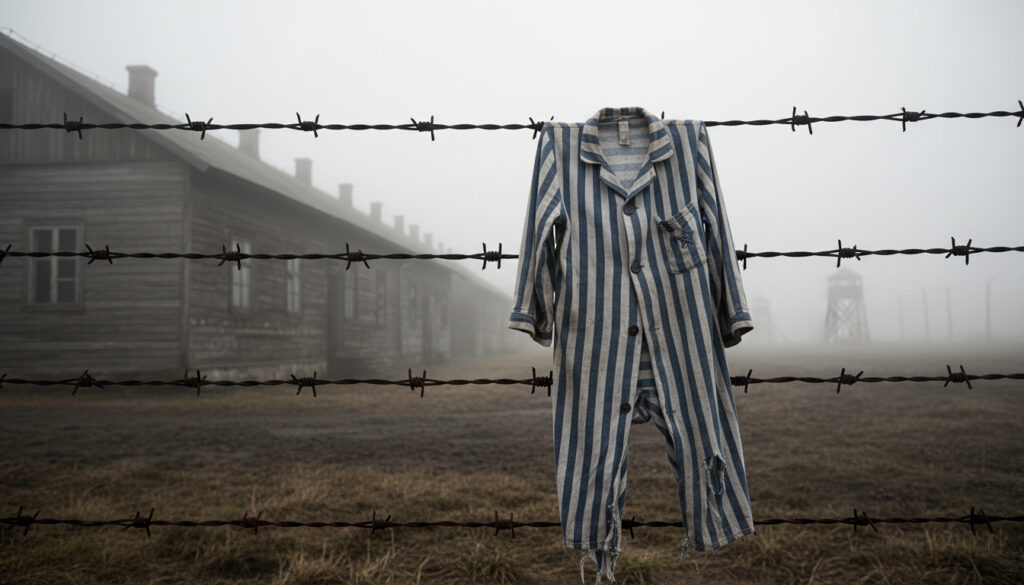
At the perimeter of the camp, Bruno discovers a fence separating his comfortable home from thousands of prisoners forced to wear striped uniforms. Despite warnings from his family, he befriends Shmuel, a Jewish boy his age held captive within the camp, and begins sharing food with him through the fence.
- Fiction status: The narrative is entirely imagined, not based on specific historical individuals.
- Child’s perspective: The Holocaust is filtered through Bruno’s naive nine-year-old viewpoint.
- Auschwitz setting: The story takes place at the actual concentration camp, which Bruno calls “Out-With.”
- Controversial reception: Critics debate whether the book trivializes Holocaust suffering through its narrative choices.
- Bestseller status: The novel achieved significant commercial success following its 2006 release.
- Film adaptation: A 2008 movie brought the story to international audiences.
- Educational use: The book appears frequently in school curricula despite debates about historical accuracy.
| Attribute | Detail |
|---|---|
| Author | John Boyne |
| Publication Date | 2006 |
| Page Count | 216 |
| Film Release | 2008 |
| Director | Mark Herman |
| Recognition | Irish Book Awards |
Is The Boy in the Striped Pajamas Based on a True Story?
The novel is fiction, not based on a true story, though it is set during the actual Holocaust and features the real concentration camp Auschwitz, as noted by Audible and Plugged In. John Boyne created the narrative to explore historical events through an imagined perspective rather than document specific historical facts.
The book’s approach—depicting the Holocaust from a Nazi commandant’s son’s innocent viewpoint—is intentionally fictional. This narrative strategy aims to illustrate how ordinary people can become complicit in atrocities without fully comprehending the scope of their actions or the system they serve.
The novel is entirely fictional. While Auschwitz operated as a real concentration camp during World War II, Bruno and Shmuel are invented characters. John Boyne constructed the narrative to examine how ordinary individuals become complicit in atrocities without full comprehension of their actions.
What Is the Ending of The Boy in the Striped Pajamas?
The conclusion is tragic and unflinching. When Bruno’s mother decides to return the family to Berlin, Bruno and Shmuel make plans for one final day together. Bruno disguises himself in striped pajamas to help Shmuel search for his missing father within the camp, according to LitCharts.
Book Ending
Before the boys can escape, soldiers round up Bruno, Shmuel, and other prisoners, marching them into a gas chamber, as documented by Audible and Plugged In. Bruno and Shmuel hold hands as the doors close, and Bruno is never heard from again. After months, Bruno’s father discovers his son’s clothing and boots where Bruno left them, realizing his son’s fate.
Film Adaptation
The 2008 film adaptation directed by Mark Herman brought the narrative to international audiences. While the cinematic version maintains the book’s tragic conclusion and central themes, specific differences in the ending’s cinematic execution remain unclear.
Bruno and Shmuel die together in a gas chamber after Bruno disguises himself to enter the camp. Bruno’s father discovers his son’s clothing months later, understanding his fate. This tragic conclusion underscores the indiscriminate brutality of the Holocaust.
What Age Is The Boy in the Striped Pajamas Appropriate For?
Specific age rating guidelines and comprehensive parental advisories remain undefined. The film adaptation carries a PG-13 rating. The novel’s content—including depictions of the Holocaust, gas chambers, and child death—suggests parental guidance is necessary for younger readers.
Educators and parents should review the material considering the emotional maturity of the reader. The book’s presence in school curricula indicates it is frequently taught to middle school and high school students, though this usage remains controversial among Holocaust education specialists.
Comprehensive age rating guidelines and parental advisories remain undefined. The film adaptation carries a PG-13 rating. Parents and educators should review content regarding the Holocaust, gas chambers, and child death before assigning to younger readers.
Who Wrote The Boy in the Striped Pajamas?
Author Background
John Boyne is an Irish novelist who created The Boy in the Striped Pajamas as a work of historical fiction. He developed the narrative to explore the Holocaust through an imagined perspective, emphasizing themes of complicity and innocence rather than documenting specific historical events or real individuals.
Film Adaptation
The 2008 film adaptation was directed by Mark Herman. The movie translates Boyne’s literary vision to the screen, maintaining the novel’s core narrative structure and tragic ending while reaching a broader international audience through cinematic distribution.
How Did the Book Reach Global Audiences?
- : John Boyne publishes the novel.
- : The book achieves bestseller status.
- : Film adaptation directed by Mark Herman releases.
- : Schools worldwide adopt the text into curricula.
- : The book and film become available on major streaming platforms.
What Facts Are Established Versus Uncertain?
| Established Information | Information Remaining Unclear |
|---|---|
| The novel is fictional, not based on a true story. | Specific historical accuracy of daily camp details depicted. |
| Setting is Auschwitz concentration camp. | Consensus on appropriate age ratings for educational use. |
| Bruno and Shmuel die in a gas chamber. | Precise global sales figures and translation counts. |
| Published in 2006 by John Boyne. | Specific curriculum adoption dates by school districts. |
| Film released in 2008. | Detailed differences between book and film endings. |
| Received Irish Book Awards recognition. | Long-term psychological impact studies on young readers. |
How Does the Novel Fit Into Holocaust Literature?
The story explores innocence amid atrocity, presenting the Holocaust through a child’s perspective, according to BookRags. Bruno’s friendship with Shmuel represents the human capacity for connection even in humanity’s darkest moments, as analyzed by BulbApp.
The narrative examines themes of privilege, the corruption of ideology, and the devastating consequences of hatred. Readers seeking other historical fiction works might consult the Throne of Glass Reading Order for alternate series, though those texts address fantasy rather than historical trauma.
What Do Critics and Sources Say?
Bruno’s friendship with Shmuel represents the human capacity for connection even in humanity’s darkest moments.
— Novel Analysis, BulbApp
The novel explores innocence amid atrocity, presenting the Holocaust through a child’s perspective.
— BookRags Study Guide
Critical reception remains divided regarding the appropriateness of using a fictionalized child’s perspective to represent Holocaust suffering. Proponents argue the narrative makes historical education accessible, while critics contend it risks trivializing the experience of victims.
Why Does the Story Resonate With Readers?
The Boy in the Striped Pajamas continues to generate discussion due to its unflinching examination of how innocence confronts institutional evil. The narrative forces readers to consider the mechanisms of complicity and the destruction of childhood during historical atrocities. For those interested in dystopian adaptations, the Cast of Los Juegos del Hambre offers information on another franchise examining youth and survival.
Frequently Asked Questions
What are the main themes of The Boy in the Striped Pajamas?
The primary themes include innocence amid atrocity, friendship transcending barriers, complicity in systemic evil, and the corruption of ideology. The novel examines how privilege and ignorance can coexist with genocide.
Is the book historically accurate?
The book is fiction set during real events. While Auschwitz was a real concentration camp, the specific characters and interactions are invented. Critics debate whether the depiction of camp life and the feasibility of Bruno’s access to the fence are historically realistic.
How long is The Boy in the Striped Pajamas?
The novel contains approximately 216 pages in its standard edition, making it a relatively short novel suitable for classroom reading.
Who dies at the end of the story?
Both Bruno and Shmuel die in the gas chamber. After Bruno disguises himself to enter the camp and help search for Shmuel’s father, soldiers round up the boys with other prisoners.
Is the book suitable for 12-year-olds?
The book is frequently taught in middle schools, but parents should consider the child’s maturity regarding Holocaust themes, including death camps and child mortality. The film carries a PG-13 rating.
What does “Out-With” mean?
“Out-With” is Bruno’s childish mispronunciation of Auschwitz, the Nazi concentration camp where his father serves as commandant.
More related posts
 Yona of the Dawn – Season 2 News, Manga End, Where to Watch
 Tottenham vs Man City Standings: H2H Record & League Table
 Anna Nicole Smith: Life, Death, and Legal Battles
 Larry David: Seinfeld Co-Creator & Curb Your Enthusiasm Star
 Indian Restaurant Near Me: Best in Dublin & Ireland 2026
 Wingate by Wyndham Calgary Airport: Shuttle, Amenities & Reviews
 Cam Newton: Biography, Stats, Net Worth, and Latest News
 Tyler Hynes: Facts, Rumors, and Career