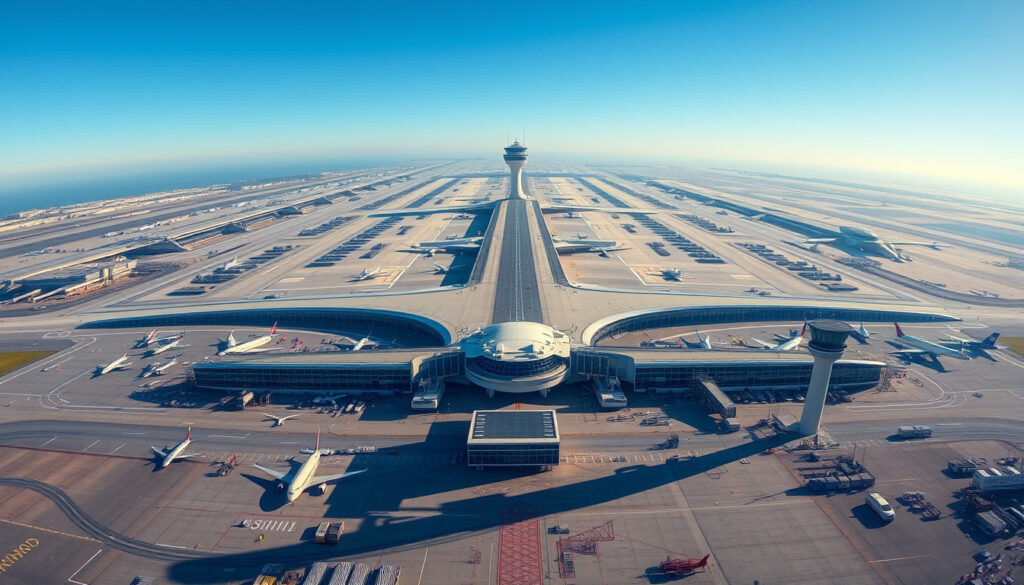
Largest Airport in the World – Area vs Passenger Rankings
When travelers ask which airport holds the title of largest in the world, the answer depends entirely on the metric used for measurement. Two airports consistently emerge at the top of global rankings, though they excel in fundamentally different categories. King Fahd International Airport in Saudi Arabia claims the distinction of largest by physical land area, while Hartsfield-Jackson Atlanta International in the United States holds the crown for busiest by passenger traffic. Understanding these distinct leaders requires examining both metrics separately.
The distinction between size and traffic volume creates frequent confusion among travelers researching airport statistics. An airport’s land area reflects its physical footprint and potential for future expansion, while passenger traffic measures current operational demand and connectivity. This article examines both metrics comprehensively, presenting the top airports across different ranking systems and explaining why these leaders differ so significantly.
What is the largest airport in the world by area?
King Fahd International Airport (DMM) in Dammam, Saudi Arabia, occupies an area of 776 square kilometers, securing its position as the world’s largest airport by land area. The Guinness World Records has officially recognized this achievement. To put this measurement in perspective, the airport’s footprint exceeds the size of many small cities and encompasses enough land to accommodate extensive future development.
Airport Size at a Glance
King Fahd International (DMM) spans 776 km²
Hartsfield-Jackson Atlanta handles 63.1M seats
Area measures physical size; traffic measures demand
Measurements differ across sources due to methodology
Key Facts About the Largest Airports
- King Fahd International Airport holds the Guinness World Record for largest airport by land area at 776 square kilometers
- Saudi Arabia hosts the two largest airports by area, with King Khalid International in Riyadh covering 375 km²
- Denver International Airport ranks third globally and largest in North America at 137.8 km²
- U.S. airports dominate passenger traffic despite relatively smaller land areas
- Rankings vary slightly across sources due to differences in measuring total land versus operational area
- The world’s largest airports by area consistently include hubs from Saudi Arabia, the United States, and Asia
- No significant area changes were recorded for the top rankings between 2024 and 2025
Top 10 Largest Airports by Land Area
| Rank | Airport | Location | Area (km²) | Annual Passengers |
|---|---|---|---|---|
| 1 | King Fahd International (DMM) | Dammam, Saudi Arabia | 776 | 12 million |
| 2 | King Khalid International (RUH) | Riyadh, Saudi Arabia | 375 | 37.2 million |
| 3 | Denver International (DEN) | Denver, USA | 137.8 | 82.4 million |
| 4 | Kuala Lumpur International (KUL) | Kuala Lumpur, Malaysia | 100 | – |
| 5 | Dallas/Fort Worth International (DFW) | Dallas/Fort Worth, USA | 69.6–69.7 | 73 million |
| 6 | Orlando International (MCO) | Orlando, USA | 46.9–69.6 | 50 million |
| 7 | Washington Dulles International (IAD) | Washington D.C., USA | 47.8–52.6 | 24 million |
| 8 | Beijing Daxing International (PKX) | Beijing, China | 46.6–47 | 45 million |
| 9 | George Bush Intercontinental (IAH) | Houston, USA | 44.5 | – |
| 10 | Shanghai Pudong International (PVG) | Shanghai, China | 39.9–40 | – |
What is the busiest airport in the world?
Hartsfield-Jackson Atlanta International Airport (ATL) consistently ranks as the world’s busiest airport by passenger traffic. According to current data from Wikipedia’s compilation of passenger traffic statistics and OAG scheduling data, Atlanta maintains its position with approximately 63.1 million seats available in 2025. This represents the airport’s continued dominance in handling passenger volume year after year.
The distinction between largest by area and busiest by traffic reflects different operational priorities. Atlanta’s high passenger numbers result from its role as a major connecting hub for domestic and international flights, particularly for Delta Air Lines. Meanwhile, airports like King Fahd serve far fewer passengers despite their massive land areas, demonstrating that physical size does not correlate directly with traffic volume.
Understanding the Busiest Rankings
The Airports Council International (ACI) typically publishes official passenger traffic rankings annually, though complete 2024-2025 data may not yet be finalized in all sources. Current rankings rely heavily on OAG flight schedule data and Wikipedia’s ongoing compilation of airport statistics. These sources provide the most comprehensive available data while awaiting official ACI releases.
Complete ACI 2025 passenger rankings remain forthcoming, as the organization typically finalizes annual data later in the year. Current conclusions draw from OAG scheduling data, Wikipedia citations, and early 2025 projections. Rankings may shift slightly once official figures are released.
Area Leaders Versus Traffic Leaders
A striking contrast emerges when comparing the largest airports by area with the busiest by passenger traffic. King Fahd International Airport, despite covering 776 square kilometers, handles only approximately 12 million passengers annually. In contrast, Denver International Airport covers 137.8 square kilometers but serves 82.4 million passengers. This disparity illustrates how geography, hub status, and airline networks influence passenger volumes more significantly than physical footprint.
American airports dominate the passenger traffic rankings, with multiple U.S. hubs appearing among the world’s busiest. This dominance reflects the country’s extensive domestic route network, major airline hub operations, and high volume of connecting passengers. Atlanta leads this category, followed by other major connecting hubs including Dallas/Fort Worth and Denver.
What are the top 10 largest airports in the world?
The top 10 airports by land area demonstrate a clear geographic pattern, with Saudi Arabia holding the top two positions due to available desert land for expansive developments. The United States contributes five entries to this ranking, reflecting both the country’s aviation infrastructure needs and available land for airport construction.
Geographic Distribution of the Largest Airports
Saudi Arabia’s prominence in airport size stems from Vision 2030 initiatives that prioritize aviation infrastructure development. King Fahd and King Khalid International airports benefit from vast desert terrain that allows for virtually unlimited future expansion. The World Population Review notes that these Saudi hubs were designed with long-term growth projections in mind.
Asian airports appearing in the top 10 include Kuala Lumpur International, Beijing Daxing, and Shanghai Pudong. These facilities represent the region’s significant investment in aviation infrastructure to support growing passenger demand. Beijing Daxing, opened in 2019, has rapidly ascended the rankings despite its relatively recent construction.
Rankings vary across sources due to different measurement methodologies. Some figures represent total land area including undeveloped zones, while others measure only operational terminal and runway space. Orlando International shows particular variation, with some sources citing 46.9 km² and others listing 69.6 km² depending on the boundaries considered.
What is the 2nd largest airport in the world?
King Khalid International Airport (RUH) in Riyadh, Saudi Arabia, ranks as the second largest airport in the world by land area, covering approximately 375 square kilometers. This airport serves as the primary gateway to the Saudi capital and functions as a major hub for Saudi Arabian Airlines and other carriers operating in the region.
Profile of King Khalid International
The airport handles approximately 37.2 million passengers annually across 217,000 to 269,000 flights, according to available data. Its substantial land area provides significant capacity for future expansion, aligning with Saudi Arabia’s broader infrastructure development goals. Terminals and facilities occupy only a fraction of the available land, leaving extensive room for growth.
King Khalid International features multiple terminals and serves as a key connecting point for pilgrims traveling to Mecca, particularly during Hajj season. The airport’s design incorporates provisions for handling large volumes of religious tourists, reflecting Saudi Arabia’s position as a global pilgrimage destination.
How have the rankings for largest airports evolved?
The hierarchy of largest airports by area has remained remarkably stable over recent decades, with King Fahd International Airport maintaining its Guinness World Record position since receiving the designation. The Saudi airport officially opened in 1999 and has retained its top ranking since that time, facing no challengers with sufficient land area to dispute its position.
Timeline of Key Developments
- 1999: King Fahd International Airport opens in Dammam, Saudi Arabia, immediately becoming the world’s largest by land area
- 2000s: King Khalid International Airport expands, solidifying Saudi Arabia’s dominance in airport size rankings
- 2019: Beijing Daxing International Airport opens, becoming one of the largest newly constructed airports globally
- 2024-2025: Rankings remain stable with no significant changes to the top positions; no new airports challenge existing leaders
Passenger traffic rankings have shown more dynamism than size rankings, with Hartsfield-Jackson Atlanta consistently retaining its position as the world’s busiest airport for passenger volume over an extended period. The WorldAtlas documentation shows that Atlanta has held this position for multiple consecutive years, adapting to growing demand through operational efficiency rather than physical expansion.
What is established versus unclear about airport rankings?
- King Fahd International (DMM) is the largest by land area at 776 km²
- Atlanta (ATL) is the busiest by passenger traffic at 63.1M seats
- Saudi airports dominate size rankings; U.S. airports dominate traffic rankings
- Top 10 by area includes King Fahd, King Khalid, Denver, Kuala Lumpur, and DFW
- Rankings remained stable between 2024 and 2025
- Some area measurements vary between sources (e.g., Orlando: 46.9–69.6 km²)
- Complete ACI 2025 passenger rankings not yet finalized
- Precise passenger volumes for airports like George Bush Intercontinental require verification
- Beijing Daxing projections of 70 million passengers by 2025 await confirmation
Why do size and traffic rankings differ so significantly?
The fundamental difference between airport size and traffic rankings reflects distinct strategic priorities and geographic constraints. Airports in Saudi Arabia and other regions with available desert land can construct facilities with massive land areas, but these areas include extensive undeveloped zones reserved for future growth. The IntelPoint analysis explains that Saudi airport design philosophy prioritizes long-term expansion capacity over immediate operational efficiency.
U.S. airports, by contrast, often operate within more constrained geographic boundaries, having expanded existing facilities rather than constructing entirely new ones. This approach concentrates operational capacity in smaller footprints, enabling higher passenger volumes through efficient terminal design and concentrated airline hub operations.
The Role of Airline Hubs
Airline hub operations significantly influence passenger traffic rankings independent of physical airport size. Atlanta’s dominance reflects Delta Air Lines’ major hub presence, which funnels connecting passengers through the facility. Dallas/Fort Worth similarly benefits from American Airlines’ hub operations. These airline concentration patterns create traffic volumes that far exceed what geographic size alone would predict.
What sources document these airport rankings?
Multiple authoritative sources contribute to the documented rankings of the world’s largest airports. The Airports Council International (ACI) serves as the primary industry organization tracking global airport statistics, though their official annual reports may lag behind current data releases. Industry publications and reference databases supplement official statistics with more timely updates.
The distinction between largest by area (King Fahd International) and busiest by passengers (Hartsfield-Jackson Atlanta) reflects fundamentally different metrics that should not be conflated when discussing airport superlatives.
— Compiled from Wikipedia, WorldAtlas, World Population Review, and OAG data
The sources consulted for this analysis include flight scheduling databases, geographic reference publications, and industry organization reports. Discrepancies in measurements typically arise from different methodological approaches to defining airport boundaries and measuring land area. Travelers seeking the most current data should consult multiple sources and note the specific measurement criteria each employs.
Key takeaways about the world’s largest airports
The question of which airport is the largest in the world cannot be answered definitively without specifying the measurement metric. King Fahd International Airport in Saudi Arabia holds the title of largest by land area at 776 square kilometers, a distinction unlikely to change given the massive lead over second-place King Khalid International. Hartsfield-Jackson Atlanta International claims the position of busiest by passenger traffic with approximately 63.1 million seats, reflecting the operational realities of a major airline hub rather than physical size.
For travelers and aviation enthusiasts seeking to understand global airport rankings, recognizing this fundamental distinction between size and traffic provides essential context. Both metrics offer valuable insights into airport operations, though they measure fundamentally different characteristics. The Thunder Bay to Winnipeg – Distance, Drive Time, Flights & Bus guide demonstrates how regional airport comparisons follow similar principles, with size and traffic often differing based on geographic and operational factors.
Frequently asked questions
What is the top 20 biggest airport in the world?
The top 20 by land area extends beyond the top 10 to include additional airports such as Jakarta Soekarno-Hatta, Tokyo Haneda, and Munich Airport. Precise rankings within the broader top 20 vary by source due to measurement methodology differences.
Which airport is both the biggest and busiest in the world?
No single airport holds both titles simultaneously. King Fahd International is biggest by area, while Atlanta is busiest by passengers. These represent separate metrics with different leaders.
How big is King Fahd International Airport compared to other major airports?
King Fahd spans 776 km², which is more than five times larger than second-place King Khalid International (375 km²) and more than 50 times larger than Atlanta (15 km² estimated footprint).
Why do rankings for largest airports vary between sources?
Variations occur because sources differ in how they define airport boundaries. Some include undeveloped land and buffer zones, while others measure only operational areas. These methodological differences produce varying area figures.
Is the Sell Off Vacations Canada service reliable for booking flights?
The Sell Off Vacations Canada – Reviews, Deals and Reliability Guide provides detailed analysis of this travel service for those considering Canadian travel options.
What is the largest airport in North America?
Denver International Airport is the largest in North America by land area, covering approximately 137.8 square kilometers. It ranks third globally behind the two Saudi airports.
Are airport rankings expected to change in 2025 or 2026?
Based on available data, the top positions by area remain stable with no airports under construction likely to challenge current leaders. Passenger traffic rankings may shift as airlines adjust hub operations and new routes open.
More related posts
 Prayer Times in Mississauga Canada: Fajr, Zuhr, Asr, Maghrib, Isha
 When Life Gives You Tangerines – Release Date Cast Plot Guide
 Black Bolt Card List – Stats Decks Synergies Meta Guide
 Saint Anne de Bellevue – Quebec’s Canal Town on Montreal’s Edge
 Did Ed Gein Kill His Brother? Henry Gein’s Mysterious Death
 BoC Rate Announcement Dates 2025: Full Official Schedule
 Quebec Minimum Wage 2026: $16.60/hr Increase May 1
 Shin Hye-sun – Age, Height, Dramas and New Projects