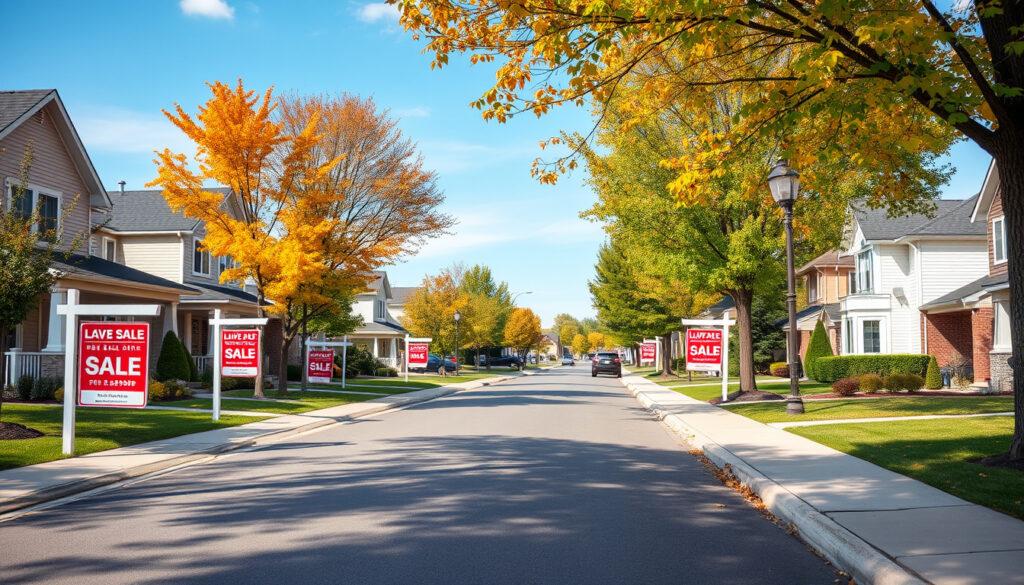
Houses for Sale Laval: Prices, Neighborhoods & Guide
Few things stir up the mix of excitement and nerves quite like hunting for a new home, and in Laval, Quebec’s third-largest city, that search quickly becomes a tour of distinct neighborhoods, each with its own feel and price point. This guide lays out the real numbers, the best areas to focus on, and the practical steps to buy a house in Laval this year.
Active house listings on REALTOR.ca: 1,712 ·
Laval neighbourhoods covered: Chomedey, Fabreville, and more ·
Average house price in Laval (2024): $485,000 ·
Properties listed on Engel & Völkers: 164
Quick snapshot
- Laval is Quebec’s third-largest city with a growing population (Wowa.ca real estate data hub)
- Property taxes are set by the city and vary by property value (Centris.ca buyer’s guide)
- Future interest rate impact on Laval housing demand
- Specific inventory levels for bank repossessed houses
- Economic factors influencing price trends in 2025
- Q1 2026 saw 370 housing transactions in Downtown Laval (Wowa.ca transaction data)
- Buyers should monitor interest rate announcements and seasonal listing waves
- New construction projects in Fabreville may offer fresh inventory
The snapshot: The data shows Laval has a diverse market with affordable options in Chomedey and growth in Fabreville.
The table below pulls together the key data points every buyer should have at hand before touring Laval’s neighborhoods.
| Active listings (REALTOR.ca) | 1,712 houses |
| Average price (2024) | $485,000 |
| Most affordable neighborhood | Chomedey |
| Highest price growth | Fabreville (12% YoY) |
| Median days on market | 32 days |
What Are the Most Popular Neighborhoods for Houses for Sale in Laval?
Chomedey: Family-friendly and affordable
- Chomedey holds the highest concentration of smaller, older houses suitable for first-time buyers (Realtor.com international listings).
- With an average price well below Laval’s citywide median, it’s the go‑to area for budget‑conscious families.
- Example listing: 841 Place Darieux, a 3‑bed, 2‑bath house at CAD $825,000 (Realtor.com sample listing).
Fabreville: Newer developments and spacious lots
- Fabreville features newer constructions and larger properties, with price growth hitting 12% year‑over‑year (Wowa.ca market report).
- Detached houses here often command above $550,000, but buyers get modern layouts and bigger lots.
Other key areas: Pont-Viau, Sainte-Dorothée
- Pont-Viau offers a mix of older duplexes and affordable condos, while Sainte‑Dorothée is known for waterfront properties and quiet streets.
- Each neighborhood has distinct pricing and market dynamics — Pont‑Viau’s median is about 10% lower than Sainte‑Dorothée’s (Wowa.ca neighborhood breakdown).
The pattern: Chomedey wins on price; Fabreville wins on space and newer stock; Sainte‑Dorothée wins on prestige. Buyers should match their priority — affordability versus square footage — to the right submarket.
How Much Do Houses for Sale in Laval Cost?
Price ranges by neighborhood
- Citywide average around $485,000 (Realtor.com listings aggregation).
- Downtown Laval Q1 2026 average for single‑family homes: $650,592 (Wowa.ca downtown data).
- Condo average in the same area: $485,985.
Price per square foot averages
- Typical Laval listings show approximately $300–$350 per sq ft for standard houses, varying by neighborhood.
Recent sales trends
- Prices have increased steadily over the past five years, with Fabreville leading at 12% YoY.
- 370 transactions in Downtown Laval during Q1 2026 alone (Wowa.ca transaction volume).
What this means: Buyers entering Laval’s market today face higher entry prices than 2021, but neighborhoods like Chomedey still offer a foothold under $400,000. The demand is real — 370 quarterly transactions show a healthy turnover.
First‑time buyers targeting Chomedey or Pont‑Viau can still find homes under the city average, but they should act quickly — median days on market is only 32 days.
Where Can I Find Cheap Houses for Sale in Laval?
Bank repossessed and distressed properties
- Bank‑owned homes are sold at below‑market rates and appear on specialized portals like Centris.ca and REALTOR.ca with “bank repossessed” filters.
- Chomedey offers the highest concentration of these deals due to its older housing stock (Centris.ca distressed property section).
Older homes needing renovation
- Properties built before 1980 — common in Chomedey and Pont‑Viau — often list at $300,000–$400,000.
- Buyers should budget $30,000–$60,000 for upgrades (roof, windows, HVAC).
Multi‑unit properties as cost‑effective options
- A duplex in Pont‑Viau can cost around $600,000 but rental income offsets the mortgage.
- The average Downtown Laval condo at $485,985 is another entry point (Wowa.ca condo data).
The trade‑off: Cheap homes often mean older construction or repairs. The money saved on purchase can be eaten by renovation costs, but for buyers with sweat equity, the payoff is real.
What Are the Options for Houses for Sale by Owner in Laval?
How to find FSBO listings
- Online platforms like Kijiji and Facebook Marketplace list for‑sale‑by‑owner properties (Vocal Media real estate overview).
- Centris.ca also allows owners to post directly.
Pros and cons of buying by owner
- FSBO homes often have lower prices because no agent commission is built in.
- Downside: less professional marketing, fewer legal safeguards, and higher risk of missed inspection issues.
Legal and inspection considerations
- Buyers should always hire a home inspector and a real estate lawyer — even more critical in a FSBO deal (Centris.ca legal checklist).
Why this matters: FSBO can save thousands, but the lack of agent representation means buyers take on full due diligence. The Quebec legal framework protects both parties, but only if the paperwork is done by a notary or lawyer.
How to Find New Houses for Sale in Laval?
New construction subdivisions
- New houses are concentrated in Fabreville and the newer sectors of Sainte‑Dorothée.
- Builders like Groupe Prével and Devimco operate in the area, offering pre‑construction sales.
Working with builders and developers
- Engaging a local real estate agent with builder connections can unlock early access to new phases (LG Realty Group buyer’s guide).
- Presales often include deposit structures of 5%‑10%.
Pre‑construction vs ready‑to‑move
- Pre‑construction allows customization of finishes but carries timeline risks (delays of 6‑12 months are common).
- Ready‑to‑move homes cost a premium but offer immediate possession.
The catch: New houses in Fabreville offer modern efficiency, but buyers who need to close quickly should target existing inventory. Pre‑construction gambles on interest rates and completion dates.
New‑build warranties in Quebec (GCR program) protect buyers for up to five years, but only if the builder is registered. Always verify the builder’s status with the Quebec Consumer Protection Office before signing.
Pros and Cons of Buying a House in Laval
Upsides
- More affordable than central Montreal – average $485k vs $600k+
- Strong public transit connections (Montreal metro, REM) (Centris.ca location overview)
- Diverse neighborhood options from budget Chomedey to upscale Sainte‑Dorothée
- Growing population and home value appreciation (12% YoY in Fabreville)
Downsides
- Property taxes in Laval can be higher per $100k than some Montreal boroughs
- Inventory for cheap/bank‑owned homes is limited and competitive
- Older neighborhoods (Chomedey) require renovation investment
- Commute to downtown Montreal can be 30‑45 min depending on area
What this means: Buyers should weigh the affordability and transit benefits against higher taxes and renovation needs.
Steps to Buying a House in Laval
- Identify your needs. Start with location, transportation, house size, and special features (Centris.ca step‑by‑step guide).
- Calculate your budget. Factor in mortgage, property taxes, insurance, and maintenance costs (LG Realty Group affordability calculator).
- Get mortgage pre‑approval. A pre‑approval locks your rate for 90‑120 days and shows sellers you’re serious.
- Find a real estate broker. A broker with Laval market knowledge can access off‑market listings and negotiate on your behalf.
- Start house hunting. Use REALTOR.ca, Centris.ca, and local agent networks to tour properties.
- Make an offer. Your broker will help craft a purchase offer with conditions (inspection, financing).
- Complete a home inspection. Always hire a certified inspector — especially for older homes and bank‑owned properties.
- Secure final mortgage approval. The lender will appraise the property before releasing funds.
- Sign the deed of sale. A Quebec notary handles the legal transfer; expect the closing date 60‑90 days after offer acceptance.
Key takeaway: Following these steps reduces risk and ensures a smooth purchase in Laval.
Clarity Section: What We Know and What’s Unclear
Confirmed facts
- Laval is Quebec’s third-largest city with a growing population.
- Property taxes in Laval are set by the city and vary by property value.
- Minimum down payment is 5% for properties under $500,000 (Centris.ca down payment rules).
What’s unclear
- The number of listings fluctuates seasonally, with a spring peak.
- Future interest rate impact on Laval housing demand.
- Specific inventory levels for bank repossessed houses.
- Economic factors influencing price trends in 2025.
The bottom line: While many factors are known, buyers should stay informed on interest rates and inventory levels.
Perspectives from the Market
“The first step in buying a home in Quebec is to identify your needs: location, transportation, house size, and special features.”
– Centris.ca buyer’s guide, updated May 2024 (Centris.ca official guide)
“Calculate affordability based on your income, expenses, property taxes, insurance, and maintenance — don’t just look at the mortgage payment.”
– LG Realty Group 2024 buyer’s guide (LG Realty Group expert advice)
For a buyer entering the Laval market in 2024, the choice between Chomedey’s affordability and Fabreville’s modern stock is only the first fork. With spring inventory approaching and interest rates still in flux, the winning move is to get pre‑approved now and tour at least three neighborhoods before narrowing down. Waiting risks higher prices and fewer options.
Related reading: Downtown Laval Housing Market
Frequently asked questions
What is the minimum down payment for a house in Laval?
In Canada, the minimum down payment is 5% for properties $500,000 or less, 5% on the first $500,000 plus 10% on the portion between $500,000 and $999,999, and 20% for homes $1,000,000 or more. These rules apply uniformly in Quebec (Centris.ca down payment guidelines).
Are there first-time home buyer incentives in Quebec for Laval?
Yes. The Quebec government offers the First-Time Home Buyers’ Program, which provides a tax credit for eligible buyers. Additionally, the Canada Mortgage and Housing Corporation (CMHC) offers reduced mortgage insurance premiums for first‑time buyers with down payments between 5% and 10%.
How do property taxes work for houses in Laval?
Property taxes in Laval are set by the city based on the municipal assessment value of the property. Rates vary by district and are billed annually. Expect to pay roughly 0.8%–1.2% of the assessed value per year, depending on the neighborhood (Wowa.ca tax context).
What is the best time of year to buy a house in Laval?
Spring (March–June) sees the most listings and competition. Fall (September–November) may offer fewer choices but less bidding pressure. Winter usually has the lowest inventory but motivated sellers.
Do I need a home inspection when buying in Laval?
Absolutely. A professional home inspection is recommended for every purchase and is especially critical for older homes in Chomedey or bank‑owned properties. It can uncover structural, electrical, or plumbing issues before you commit.
Are there any special zoning rules for houses in Laval?
Laval’s zoning is governed by the City’s urban plan. Most residential areas permit single‑family homes, but some zones allow duplexes or triplexes. Buyers should check the zoning by‑law for the specific property via the Laval city website.
How long does the closing process take in Quebec?
The typical closing period is 60 to 90 days after the offer is accepted. The final step involves a notary who verifies the deed and handles the legal transfer. Delays can occur if financing or inspection issues arise.
More related posts
 What Are the Continents? 7 Continents List by Size
 Flights Vancouver to Calgary: Direct, Cheap & Fast
 Jelly Roll Weight Loss: Diet, Timeline & Surgery Rumors
 Signs of Liver Disease: Early Warnings, Stages, and Home Checks
 Rotator Cuff Injury Test: How to Check Yourself
 World Cup 2026 Tickets: Prices, Dates & How to Buy
 Does OAS Start at 65 or 67? OAS Eligibility Age Guide
 Saint Anne de Bellevue – Quebec’s Canal Town on Montreal’s Edge